Blog/
The impact of the coronavirus on last‑mile delivery in the supply chain
The rapid spread of the new coronavirus, COVID-19, regardless of borders, has impacted our societies, markets and industries. We’re evaluating how delivery companies and retailers should adapt to translate rising supply chain risks into long-lasting customers.
The growing quarantine measures imposed by national and European governments restrict the free movement of people; nevertheless, authorities are ensuring that supply chain risks are minimised and that goods keep flowing. However, the European Commission has already revised its economic forecast for 2020 down by 1%. At this moment, it’s clear that businesses need to re-evaluate their models, the resilience of their supply chain and how to stay connected with customers.
What is happening?
For many companies, the most important consideration is the impact on their supply chains, notably due to the disruption of China’s industrial fabric. Currently, one of the main supply chain problems in Europe relates to the recent stricter movement restrictions, including the closure of restaurants and non-essential shops, leading to an unprecedented rise in demand for groceries and a decrease in physical shopping for non-essential goods. Many retailers are also encouraging customers to purchase online, alleviating congestion in stores but putting pressure on the last-mile delivery system.
Urbantz delivery operations data shows the doubling of usual home delivery volumes.
At this moment, we can highlight three major events for last-mile delivery operations:
1. Unbalanced demand
All across Europe, we see that reinforced border controls have slowed down international commerce, leaving companies short of supply while demand rises, causing numerous delivery delays and shortages. The impact is felt most in groceries and pantry items, with supermarkets unable to meet high demand. This is clear when wholesalers and retailers report both a doubling of demand and huge limitations in delivery capacity dictated by a lack of human resources, with up to 30% of warehouse and delivery employees unable to work. Even though companies are boosting hiring, there are several complications related to training, licences and government incentives, especially if you are looking for drivers.
Urbantz’s conclusion: The on-demand model was the first sign of fast-moving economic challenges, but the new coronavirus has multiplied these challenges. The imbalance between demand and supply requires businesses to have digital flexibility and “on-demand operations”, as well as automated systems that make it easy to onboard drivers and adjust their capacity and load in real time.
2. Exponential growth in home deliveries
French data from early March shows an average increase of 6.2% in brick-and-mortar grocery stores, mainly in anticipation of restrictions. But the most significant increase is seen in home deliveries, with an average jump of 73.8% in metropolitan France. This unprecedented spike has caused delivery delays while companies adapt their supply chains and last-mile operations, with reports of European retailers scheduling deliveries up to two weeks ahead. Another indicator is the overall increase in e-commerce purchases of 15.3% compared with the previous quarter – some experts believe that this new experience of online shopping might have a positive effect on the sector, as new customers see that it is possible to order products online that they usually wouldn’t.
Urbantz’s conclusion: Growth in home deliveries creates opportunities for e-commerce and carriers, but only if businesses are able to quickly incorporate delivery scheduling systems, automated route optimisation and real-time integrations between stock and delivery management systems.
3. Delivery experience is a priority for retailers and carriers
Even before the outbreak of the new coronavirus, negative delivery experiences were a major concern for retailers’ reputation and customer relationships. Substandard service often left them dealing directly with their carriers. Current events have shifted the attention of carriers and retailers, forcing them to drastically adapt their last-mile delivery operations on several fronts, such as reinforcing staff safety, responding to customer needs and strengthening internal operations.
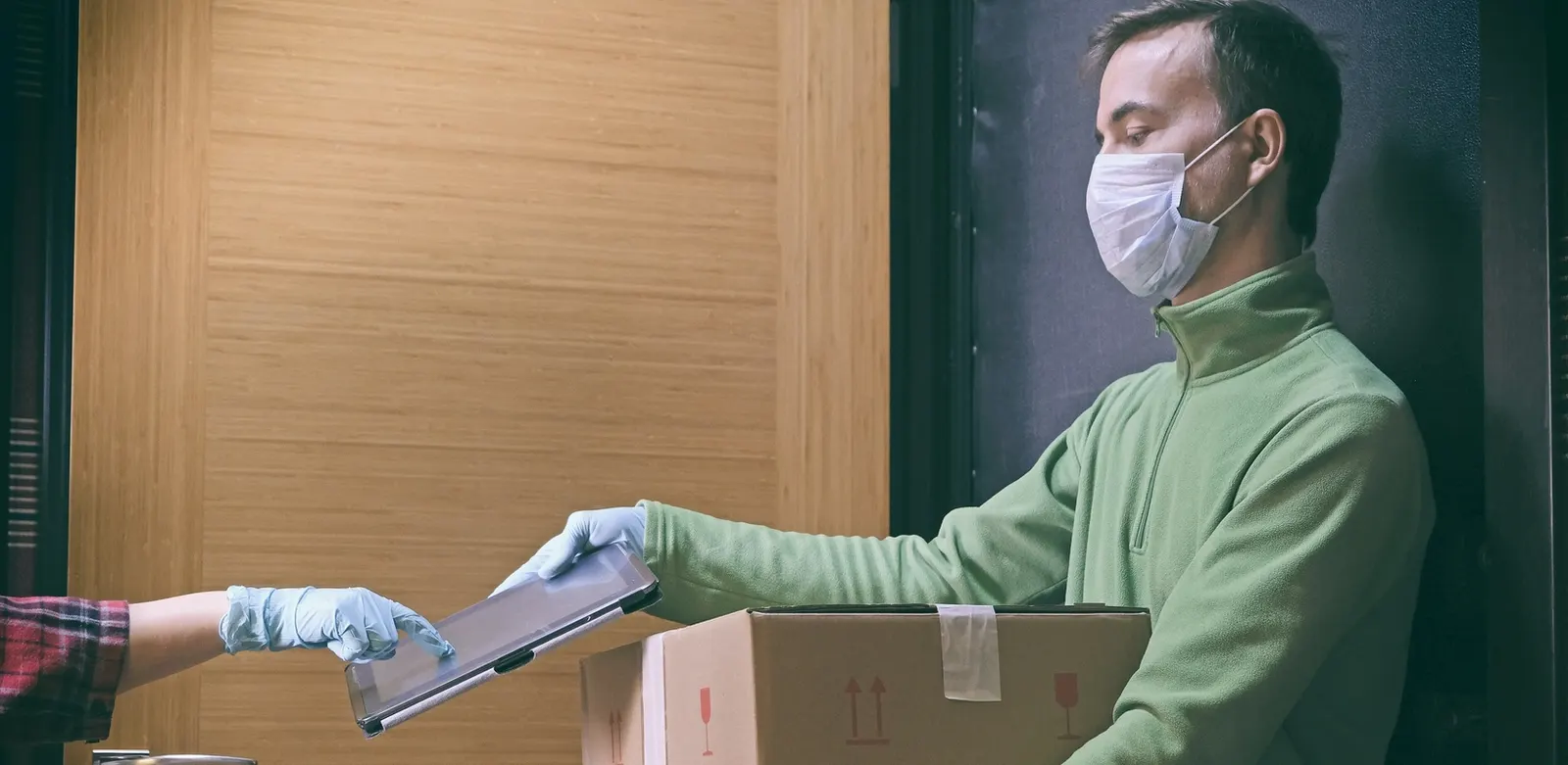
The Belgian postal operator, bpost, chose to have drivers sign the proof of delivery instead of the customer, preventing unnecessary contact. In a similar fashion, the UK home delivery company Deliveroo is adding a contactless option to its app, allowing customers to receive their orders without facing the courier. In France, retailers are studying ways to better respond to customers. One option is to offer a predefined ‘basket of goods’ that is easy to purchase and simple to assemble, while meeting customers’ needs for essential goods. Also in the UK, as across Europe, retail giants such as Morrisons are expanding their teams by hiring drivers and distribution staff. At the same time, they are strengthening their sick leave policies. This is part of an effort to keep offering home deliveries in a timely and safe way.
Urbantz’s conclusion: Logistics providers of all kinds can emerge from this pandemic with stronger operations and a greater knowledge of their customers’ needs and expectations. To have a real business impact, the level of customer satisfaction needs to be maintained once the situation has normalised – which isn’t possible without a proper monitoring, feedback and communication system.
Last-mile solutions
The predicted economic slowdown is still not being felt by retailers due to the increase in spending. But this positive side of the situation can quickly become a challenge if not taken care of, namely the increase in home deliveries. We already see some challenges: shortages and delays in supplies, an overwhelming increase in home deliveries and a lack of delivery staff.
Unsurprisingly, technology and dedicated software can be an instant lifesaver for companies dealing with last-mile issues, and a prudent investment to prepare for economic challenges and stand out from the competition.
Achieve cost optimisation now
The 73.8% increase in home deliveries in France also means that deliveries are more geographically spread, resulting in the need to allocate more resources and costs to reach certain areas. This is not ideal when you are short of human resources. Round and vehicle consolidation is key to keeping up with the larger volume and properly allocating parcels and vehicles, guaranteeing that vans are not running empty. At the same time, route optimisation ensures that different vans don’t pass down the same street on the same day, reducing the number of vehicles, drivers and time needed to deliver.
Ensure full control over your operations
Having full control of delivery operations is now more critical than ever. Our customers are reporting increases of nearly 100% in their e-commerce segments, and up to 5 times more volume in physical stores. These numbers have added huge pressure on companies’ last-mile setup. Delays, wrong data and mistakes can put the entire day’s operation at risk. Visibility over the entire process makes it possible to anticipate any issue and find quick, flexible solutions, such as reallocating rounds, adding or removing stops and communicating with drivers and customers. Make sure to use advanced (all-in-one) software to automate route optimisation, have real-time visibility over tasks and potential issues, and control the customer experience.
Respond to high volumes
Unusual volumes can disrupt your operations if your deliveries are not managed by flexible software, capable of integrating variables (from package weight and traffic conditions to van capacity, and even the time a driver might need to deliver) while still connecting to your warehouse systems. Such software provides full control and coordination between the different departments involved in last-mile delivery. Another advantage is enabling direct invoicing of all orders to the sender, making it easier to manage high volumes of tasks and ensuring error-free invoices. It also collects all data in real time, giving the user a better overview through daily reports on all activities.
Deliver value!
It is true that the new coronavirus pandemic is putting companies in a new situation. It is likely that consumers will come out of this period with a new level of expectations. They will demand not only faster, but also more flexible, more transparent and greener deliveries. With software enabling real-time tracking and optimisation, delivery follow-up and real-time contact with drivers, it is possible to adapt quickly to customers’ new level of expectations.
Want to talk about your business continuity plans around coronavirus? Get in touch today. Based on our experience with the recent events in Europe, we can help you plan and optimise your delivery operations with a rapid setup.
P.S.
We see how the unexpected COVID-19 outbreak is putting pressure on the last-mile sector, and how companies’ real-time response to these issues differentiates those who will emerge stronger from those who stand still. Those who adapt immediately manage not only to keep their customer base satisfied but also to stay ahead of the competition.
Delaying the implementation of robust operations and reliable digital systems means being in a more fragile position, unable to respond to changing customer demand. It is hard to predict the outcome of the coronavirus’s impact, but there’s one conclusion the industry can already predict: customer behaviour will change, and supply chain players have to prepare for that change today.